Airless spray painting explained: how it works, where it's used and which equipment you need
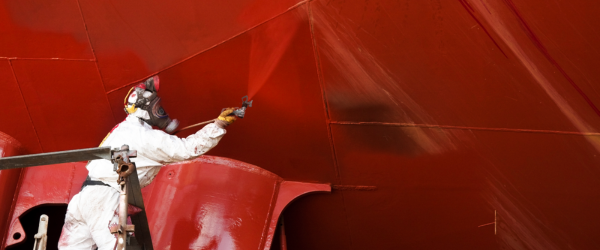
Airless spray painting is the go-to finishing technology for professionals who need to cover large surfaces fast, apply high-viscosity coatings without dilution, and deliver a consistent, uniform film thickness every time. Whether you work in industrial maintenance, structural steel, automotive refinishing or wood finishing, understanding how Airless systems work — and how to choose the right equipment — directly affects your output quality and cost per square foot. This guide covers the full picture, from the physics of high-pressure atomization to practical sprayer selection and maintenance.
What is Airless spray painting and how does it work?
Airless spray painting is a method of applying liquid coatings using high hydraulic pressure rather than compressed air as the atomizing agent. The paint is pumped at pressures typically ranging from 1,500 to 5,000 psi (100–350 bar) and forced through a precision-engineered spray tip. The sudden drop in pressure as the fluid exits the tip shatters it into a fine, controlled mist — with no air introduced into the process.
High pressure spray mechanics behind Airless technology
At the heart of any Airless system is the pump, which acts as a hydraulic intensifier. A pneumatic or electric motor drives a piston that pressurizes the coating material. The compression ratio — expressed as a multiplier such as 30:1 or 45:1 — determines how much the inlet pressure is amplified. With a 45:1 ratio and 100 psi of incoming air, the fluid pressure at the outlet reaches 4,500 psi.
That pressurized fluid travels through a high-pressure hose to the spray gun, where it's held back by a needle valve until the trigger is pulled. The instant the fluid exits through the spray tip, the pressure drop causes explosive atomization: the liquid breaks into millions of fine droplets that form a fan-shaped spray pattern across the target surface. The geometry of the tip — its orifice diameter and fan angle — determines the width and thickness of that pattern.
Airless vs. conventional spray systems: key differences
In conventional air-assisted spray systems, compressed air is mixed with the paint at the spray gun to atomize it. This produces a very fine mist suitable for detail work, but at significant cost: transfer efficiency drops to 30–55%, overspray and bounce-back are substantial, and the material must be thinned considerably to flow through the system, which can compromise the coating's properties.
Parameter
Airless
HVLP
Conventional air
Operating pressure
1,500–5,000 psi
15–45 psi
30–75 psi
Transfer efficiency
65–85%
65–90%
30–55%
Application speed
High
Low–medium
Medium
Thinning required
Minimal
High
High
Best suited for
Large surfaces,
thick coatings
Fine finishes, detail work
General purpose
Airless eliminates air from the atomization process entirely. Because the fluid itself carries all the energy needed to break up into droplets, there's no need to thin the material beyond the manufacturer's recommendation. This preserves the coating's chemical properties, reduces solvent emissions and cuts material waste significantly.
Main advantages of Airless spray painting for industrial and automotive use
Speed, coverage and material savings
The productivity difference between Airless and conventional spray systems is substantial. A single operator with a properly configured Airless sprayer can cover surfaces up to ten times faster than with a brush or roller, and three to five times faster than with a conventional air spray gun. The wide fan patterns available — from 4 to 20 inches depending on the tip — allow rapid coverage of flat panels, structural steel, walls, tanks and vehicle bodies.
Material savings are equally significant. With transfer efficiency in the 65–85% range, far less coating ends up as overspray or bounce-back compared to conventional systems. When working with expensive two-component epoxies, zinc-rich primers or polyurethane topcoats, that difference has a direct impact on project cost.
High-pressure spray systems powered by high pressure pumps for paint and coatings are also capable of handling materials that would clog or overload other spray systems: thick elastomeric coatings, bituminous mastics, fire-retardant intumescent paints and textured finishes can all be applied Airless without the excessive thinning that degrades their performance.
Achieving superior spray finishing quality on complex surfaces
Airless spray finishing delivers a continuous, even film without brush marks, roller stipple or the air pockets that can occur with conventional spray. The high-velocity atomization produces droplets that wet out the surface rapidly and self-level before curing, which is particularly important on porous or irregular substrates.
On complex surfaces — chassis components, agricultural machinery, racking systems or structural beams — the ability to maintain consistent tip distance and fan overlap while moving at a steady pace produces uniform dry film thickness across the entire surface. This matters not just aesthetically but functionally: coating manufacturers specify minimum and maximum film thicknesses for corrosion protection performance, and Airless application is the most reliable way to hit those targets consistently.
Types of Airless paint sprayer equipment you should know
Not all Airless sprayers are the same. The right choice depends on job size, coating viscosity, power availability and portability requirements.
Electric Airless paint sprayer models for mid-duty jobs
Electric Airless sprayers — typically ranging from 0.5 to 2 hp — are the most widely used category in maintenance painting, commercial painting and small-to-medium industrial jobs. They run off a standard power outlet, require no compressed air supply and are quiet enough to operate in occupied spaces. Flow rates typically range from 0.5 to 1.5 gallons per minute (roughly 2–6 liters/min), which is sufficient for most architectural and light industrial coatings.
Electric models are available in cart-mounted configurations for stationary or semi-mobile use and in more compact designs that can be moved from area to area with minimal setup time. Most are compatible with water-based and solvent-based paints, stains, lacquers and light primers.
Handheld Airless paint sprayer options for portability
Handheld Airless paint sprayers integrate the pump, motor and fluid container into a single unit that the operator holds and moves. They're designed for touch-up work, small areas, furniture finishing and jobs where setting up a full cart-mounted system isn't practical. Pressure ranges are lower — typically 500–2,000 psi — and flow rates are modest, but the ease of use and near-zero setup time make them the preferred choice for residential contractors and maintenance technicians.
The trade-off is capacity and power: handheld units are not suited to continuous production work or high-viscosity industrial coatings. For anything beyond light-duty tasks, a cart-mounted electric or pneumatic unit will deliver better results with less operator fatigue.
Airless paint sprayer gun configurations and components
The spray gun is the operator's primary interface with the system. Airless guns for industrial use are built around a high-pressure fluid body, a trigger with a positive-action safety lock, and an inlet filter that protects the tip from particle contamination. The gun connects to the high-pressure hose and accepts interchangeable spray tips that define the spray pattern.
Samoa Airless spray finishing equipment includes gun configurations optimized for different application contexts, from lightweight ergonomic designs for overhead work to heavy-duty bodies rated for abrasive coatings and aggressive solvents. The quality of the gun — particularly its sealing and needle materials — directly affects fluid control precision and service life.
Airless paint sprayer tips: selection, sizing and maintenance
The spray tip is the single component with the greatest influence on finish quality. Selecting the wrong tip is the most common cause of poor results, wasted material and unnecessary rework.
How spray tip size and fan width affect your finish
Airless tips are identified by a three-digit code that encodes two critical dimensions. The first digit, when multiplied by two, gives the fan width in inches at standard spraying distance (12 inches). The last two digits give the orifice size in thousandths of an inch.
For example, a 517 tip produces a 10-inch fan (5 × 2) with a 0.017-inch orifice — a common general-purpose configuration for architectural paints. A 623 tip produces a 12-inch fan with a 0.023-inch orifice, suited to thicker coatings like elastomerics or mastics.
Orifice size guidelines by material type:
Coating type
Recommended orifice size
Lacquers, stains, thin waterborne paints
0.009"–0.013"
Latex paints, enamels, light primers
0.013"–0.017
Heavy latex, oil-based primers, epoxies
0.017"–0.023"
Elastomerics, mastics, bituminous coatings
0.023"–0.035"
Fan angle also matters: wide angles (60°–80°) maximize coverage speed on open flat surfaces, while narrow angles (25°–40°) give better control on edges, corners, structural profiles and narrow sections.
Tip size must also be matched to the pump's flow capacity. Oversizing the tip orifice relative to the pump rating drops system pressure and ruins atomization quality. Always stay within the tip size range recommended by the equipment manufacturer.
Cleaning and replacing tips for consistent results
Spray tips wear with use. The tungsten carbide used in quality tips is hard but not indestructible: abrasive coatings, zinc-rich primers and metallic paints gradually enlarge the orifice and distort the fan pattern. A worn tip produces a wider, wetter fan at the center and thinner edges — visible as an uneven "hourglass" pattern on the surface.
The rule of thumb is to check tip wear at regular intervals by spraying a test pattern on cardboard or paper. If the fan shape has degraded noticeably from its original geometry, replace the tip.
For cleaning, always flush the system with the appropriate solvent (water for waterborne coatings, mineral spirits or dedicated equipment cleaner for solvent-based products) at the end of every shift or whenever changing materials. Remove and clean the inlet filter at the gun and at the pump. A clogged filter is among the most common causes of pressure drop, spitting and uneven atomization.
How to choose the best Airless paint sprayer for your project
Matching equipment specs to application type and coating viscosity
The two most important specifications when selecting an Airless sprayer are maximum pressure and flow rate. These two parameters determine which coatings the system can handle and how fast it can apply them.
Maximum pressure (psi/bar): For standard architectural paints and light industrial coatings, 2,000–3,000 psi is adequate. For thick epoxies, zinc primers and elastomeric coatings, look for systems rated at 3,500–5,000 psi.
Flow rate (gpm/l/min): For touch-up and small jobs, 0.3–0.5 gpm is sufficient. For large commercial or industrial projects, choose systems with 0.8–1.5 gpm or more. High-production industrial units can exceed 3 gpm.
Compression ratio: A high ratio (45:1 or above) allows the system to develop high fluid pressure from a moderate air supply, which is important when working far from the compressor or with long hose runs.
Coating viscosity is the other key variable. Every coating has a manufacturer-specified viscosity range for spray application. If the material is too thick for the pump at standard pressure, the options are to select a higher-powered pump with a larger compression ratio, to use a larger tip orifice, or — as a last resort and only within spec — to thin the material slightly. Never thin a two-component coating beyond its prescribed mix ratio.
Key factors to evaluate: flow rate, pressure range and hose length
Hose length and diameter affect system performance more than many users realize. Every foot of hose introduces friction losses that reduce available pressure at the tip. When working at long distances from the pump — on scaffolding, inside tanks or across large structures — use the largest hose diameter the system supports and factor in a pressure buffer of 10–15% above the tip's minimum operating requirement.
Motor type determines where the sprayer can be used. Electric motors require power outlets and are sensitive to voltage drops on long extension cords. Pneumatic motors run from compressed air and are intrinsically safe in solvent-rich environments — an important consideration in enclosed spaces. Gas-powered units offer true portability for remote or outdoor sites with no power supply.
Build quality and serviceability are critical for industrial users. Equipment downtime on a production line or a time-sensitive maintenance shutdown has a direct cost. Samoa Industrial's engineering and manufacturing expertise — as a company that designs and manufactures its own spray equipment rather than outsourcing production like many competitors — means faster access to spare parts, application-specific customization and a service network with genuine product knowledge.
Safety guidelines and best practices for Airless spray finishing
Personal protective equipment and workspace ventilation setup
The same high pressure that makes Airless spraying so efficient also makes it genuinely hazardous if handled incorrectly. At 3,000 psi, the fluid jet exiting the tip can penetrate skin and inject paint directly into tissue — a medical emergency that requires immediate surgical intervention. This is not a theoretical risk: injection injuries occur every year among experienced operators who momentarily treat the spray gun as a harmless tool.
The non-negotiable safety rules for Airless operation:
Never point the gun at any part of your body or at another person, even when you believe the system is depressurized.
Always engage the trigger safety lock when not actively spraying — when moving between areas, changing tips, clearing blockages or setting the gun down.
Never clear a blocked tip with your finger. Turn off the pump, release system pressure and use the tip guard or a wooden implement.
Wear appropriate PPE: respiratory protection rated for the coating being applied (half-face respirator with OV/P100 cartridges for solvent-based products), safety glasses or goggles, solvent-resistant gloves and appropriate coveralls.
Ensure adequate ventilation in enclosed spaces: Airless spraying generates fine mist and solvent vapor that accumulate rapidly. Use explosion-proof ventilation equipment when applying flammable coatings.
Common Airless spraying mistakes and how to avoid them
Incorrect tip-to-surface distance: The standard working distance is 10–14 inches (25–35 cm) from tip to surface. Too close and coating builds up excessively, causing runs and sags. Too far and the spray mist arrives partially dry, producing a rough, low-gloss finish with poor adhesion.
Inconsistent gun speed: Move the gun at a steady, constant pace parallel to the surface. Slowing down at the end of each pass allows coating to build up at the edges — a common cause of runs on vertical surfaces.
Insufficient overlap: Each pass should overlap the previous one by 50%. Less overlap produces visible stripes where film thickness drops between passes; more wastes material without improving the finish.
Wrong pressure setting: Too little pressure produces a streaky fan with heavy deposits at the center (the "fingering" or "tailing" pattern). Too much pressure over-atomizes the coating into a dry mist that loses transfer efficiency and can produce a rough texture. Always start low and increase pressure only until the fan pattern is uniform and well-defined.
Neglecting system flush: Dried coating inside the pump, hose or gun is one of the leading causes of tip blockages, uneven spray and premature pump wear. Flush thoroughly after every use and do not leave two-component materials sitting in the system beyond their pot life.
Ready to spec the right Airless system for your operation? Explore Samoa Airless spray finishing equipment and the rest of the industrial fluid solutions equipment — designed and built by engineers who understand what industrial and automotive spray finishing actually demands.
Share this publication:
Do you want more information?
Contact us now for more info or a product request!
Still don't know our diaphragm pumps? more effiency, more reliability, more simplicity and more connectivity for our AODD pumps family: PIVOT Series. Discover it here!
We use cookies to deliver personalized content, analyze trends, administer the site, track user movements on the site, and collect demographic information about our user base as a whole. Accept all cookies for the best possible experience on our website or manage your preferences.
Visit our Privacy Policy