Complete guide to wastewater and sludge pumps for municipal and industrial applications
What Are Wastewater Pumps and Why Do They Matter?
In modern industrial facilities and municipal infrastructure, wastewater pumps are indispensable components of fluid management systems. These engineered devices transport contaminated liquids, suspended solids, and semi-solid materials from one point to another with precision and reliability. Without properly specified pumping equipment, treatment operations may experience hydraulic bottlenecks, equipment fouling, environmental non-compliance, and unplanned downtime.
For plant managers and maintenance teams, dependable wastewater handling systems directly influence operational continuity. From manufacturing plants and food processing facilities to commercial buildings and treatment stations, pumps ensure that liquid waste is safely conveyed through pipelines, holding tanks, and filtration stages. Their function extends beyond simple transport; they also support process efficiency, worker safety, and regulatory compliance.
Core Pump Types: Sewage, Effluent, and Sludge Pumps
Different applications require specialized pump configurations. Sewage pumps are designed to transfer raw influent containing solids, fibrous materials, and organic debris. These units commonly operate in lift stations, underground pits, and municipal collection systems where durability is critical.
Effluent pumps, by contrast, handle partially treated liquids with minimal solids content. They are frequently installed downstream of septic tanks or primary treatment systems where cleaner discharge must be moved efficiently.
For highly viscous media, sludge pumps are the preferred solution. These heavy-duty pumps manage dense slurry, sediment, and residual biosolids generated during industrial and treatment processes. Their robust impeller geometry and abrasion-resistant materials help reduce wear in demanding environments.
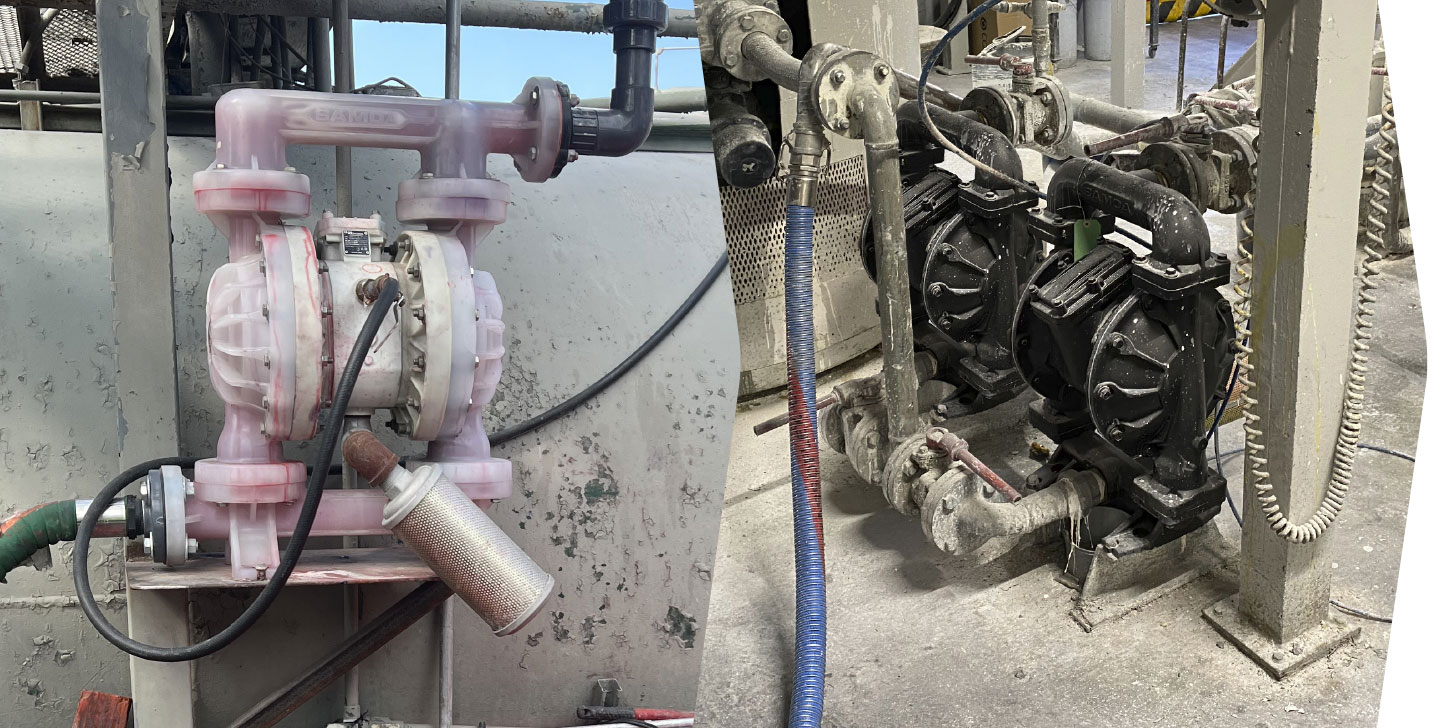
Air Operated Double diaphragm pumps handle the challenges of wastewater applications
AODD pumps are designed to handle the challenges of wastewater pumping with ease. Their double diaphragm design and check valve system allow them to efficiently manage large solids and high-viscosity fluids without clogging. These pumps are made from corrosion and abrasion resistant materials, making them durable enough to withstand harsh chemicals and abrasive particles. Additionally, AODD pumps automatically adjust to varying flow rates and can run dry without damage, reducing maintenance needs and minimizing downtime.
How Wastewater Pumps Work: Key Operating Principles
Most wastewater pumps operate through centrifugal force. An electric motor drives an impeller, creating pressure differentials and fluid velocity that propel liquids through the system. In high-solid applications, vortex or grinder mechanisms may be incorporated to reduce clogging and maintain flow integrity.
Performance depends on several variables, including flow rate, head pressure, solids concentration, and pump curve alignment. Improper sizing can result in cavitation, overheating, or premature seal failure. Consequently, routine inspection, vibration monitoring, and preventive maintenance remain essential for long-term reliability.
In demanding industrial ecosystems, effective fluid transfer equipment is not merely operational support—it is foundational infrastructure.
Sewage Pump Applications in Municipal Wastewater Systems
Municipal wastewater infrastructure depends heavily on reliable sewage pump systems to maintain uninterrupted wastewater transport across expanding urban environments. These pumps are engineered to move contaminated liquids, suspended solids, and organic refuse through underground sewer networks with consistent hydraulic performance. In densely populated regions, even a brief pumping failure can trigger overflow events, environmental contamination, and operational disruption.

Municipal Wastewater Collection and Lift Stations
Within municipal collection networks, wastewater transfer pumps play a pivotal role in conveying sewage from low-elevation areas to higher treatment points. Since gravity flow alone is often insufficient, lift stations are strategically installed to sustain fluid movement across extended pipeline corridors.
Modern sewer pumping stations commonly incorporate submersible units equipped with non-clog impellers and grinder assemblies. These mechanisms reduce the risk of ragging and blockage caused by fibrous debris, wipes, and sediment accumulation. For maintenance personnel, dependable pump automation and level-control instrumentation are equally important, as they help minimize emergency callouts and optimize energy consumption.
Corrosion resistance also remains a major consideration. Municipal wastewater frequently contains abrasive particles, hydrogen sulfide gases, and chemically aggressive compounds that accelerate wear on internal pump components.
Biosolids Handling at Treatment Plants
Beyond collection systems, sludge transfer equipment is essential during biosolids processing at wastewater treatment facilities. Thickened sludge, residual slurry, and digested solids require robust pumping systems capable of handling high-viscosity media without excessive mechanical strain.
Heavy-duty solids-handling pumps are often deployed during dewatering, anaerobic digestion, and final disposal operations. Their hardened materials and reinforced seals improve longevity under continuous-duty conditions.
For plant managers, efficient fluid conveyance systems directly support regulatory compliance, operational stability, and reduced lifecycle costs. In modern municipal operations, pumping infrastructure is not simply auxiliary equipment—it is a cornerstone of public sanitation management.
Sludge Pump Solutions for Industrial Effluent Management
Industrial facilities generate complex waste streams that demand resilient and highly engineered pumping systems. In sectors such as mining, chemical processing, food manufacturing, and pulp production, a properly specified sludge pump is essential for maintaining continuous industrial effluent handling and minimizing operational interruptions. These pumps are specifically designed to transfer dense slurry, semi-solid residue, and contaminated process fluids that conventional pumps often cannot manage efficiently.
Common Industrial Effluent Challenges and Fluid Properties
Industrial effluent rarely exhibits uniform characteristics. Instead, operators must contend with fluctuating viscosity, elevated solids content, corrosive compounds, and abrasive particulates. These conditions create substantial mechanical stress on slurry transfer systems and associated pipeline infrastructure.
Highly viscous media can reduce flow efficiency and increase motor loading, while abrasive particles accelerate impeller erosion and seal degradation. Certain industries also produce fibrous byproducts that contribute to clogging and hydraulic instability. As a result, maintenance teams frequently prioritize wear-resistant materials, thermal monitoring, and predictive servicing to prevent catastrophic equipment failure.
Another challenge lies in maintaining consistent throughput during variable production cycles. Sudden surges in solids concentration can overwhelm underperforming pumping equipment and compromise downstream treatment operations.

Choosing the Right Sludge Pump for Abrasive and Viscous Media
Selecting the appropriate solids-handling pump requires a detailed understanding of fluid dynamics and process conditions. Centrifugal pumps are commonly used for moderate-viscosity applications, whereas progressive cavity and positive displacement systems are better suited for dense or shear-sensitive sludge.
Material construction is equally critical. Hardened alloys, elastomer-lined casings, and abrasion-resistant impellers improve durability when handling aggressive industrial waste streams. In high-temperature or chemically volatile environments, reinforced seals and corrosion-resistant components provide additional operational security.
For plant managers, investing in reliable industrial wastewater pumping equipment supports regulatory compliance, energy efficiency, and long-term asset preservation. In demanding process environments, pump reliability directly influences productivity and environmental performance.
Effluent Pumps vs. Sewage Pumps: Differences and Selection Guide
In fluid management systems, selecting between effluent pumps and sewage pumps requires a precise understanding of wastewater composition, hydraulic demands, and operating conditions. Although both technologies are designed for liquid transfer, their internal configurations and performance capabilities differ significantly. Choosing the wrong pump can lead to premature wear, excessive maintenance requirements, and inefficient handling of industrial effluent streams.
Effluent pumps are typically engineered for relatively clear liquids containing minimal suspended solids. They are widely used in secondary treatment stages, drainage systems, and applications involving partially treated discharge. By contrast, sewage pumps are constructed to process raw wastewater containing fibrous materials, organic debris, and larger solids. Their impeller geometry and passage design help prevent clogging during heavy-duty operation.
Performance Criteria and Material Compatibility
When evaluating wastewater pump equipment, maintenance personnel must consider fluid chemistry, solids concentration, and temperature fluctuations. Corrosive compounds found in industrial discharge systems can rapidly degrade standard cast-iron components if material compatibility is overlooked.
For chemically aggressive applications, stainless steel alloys, elastomer-lined casings, and abrasion-resistant impellers often provide greater longevity. In high-solids environments, non-clog and vortex impeller designs improve hydraulic reliability while reducing downtime associated with blockages and seal failures.
Operational efficiency also depends on motor protection, seal integrity, and thermal dissipation. Pumps exposed to continuous-duty cycles require enhanced cooling and robust bearing assemblies to maintain stable performance under sustained loading.
Sizing Your Pump: Flow Rate, Head Pressure, and Duty Cycle
Proper pump sizing remains critical for long-term reliability. Engineers typically evaluate flow rate, total dynamic head, and expected duty cycle before selecting a system for effluent transfer or raw sewage handling.
Undersized pumps may struggle with throughput demands, while oversized systems can generate turbulence, energy inefficiency, and accelerated component fatigue. Accurate hydraulic calculations help ensure consistent operation, reduced lifecycle costs, and improved process stability across demanding municipal and industrial environments.
Maintenance Best Practices for Wastewater and Sludge Pumps
Reliable pump performance is essential for maintaining uninterrupted operations in municipal wastewater facilities and industrial treatment environments. Wastewater and sludge pumps operate under severe mechanical and chemical stress, often handling abrasive solids, corrosive compounds, and high-viscosity media. Without a structured maintenance strategy, even robust pumping systems can experience premature degradation, costly downtime, and environmental compliance issues.
Preventive Maintenance Schedules and Inspection Checklists
An effective preventive maintenance program begins with routine inspection intervals based on operating hours, duty cycle, and fluid characteristics. In wastewater treatment systems, maintenance personnel should regularly examine impellers, seals, bearings, and wear plates for erosion or material fatigue.
Lubrication schedules are equally important. Insufficient lubrication frequently contributes to bearing overheating and shaft misalignment, particularly in continuous-duty applications. Operators should also monitor vibration signatures, amperage fluctuations, and motor temperatures to identify abnormalities before catastrophic failure occurs.
Inspection checklists typically include seal integrity verification, suction and discharge pressure readings, electrical connection assessments, and debris accumulation checks within wet wells or pump basins. In sewage pump handling infrastructure, fibrous materials and sediment buildup can significantly reduce hydraulic efficiency if left unmanaged.
For sludge applications, flushing procedures and periodic cleaning help prevent hardened residue from restricting internal flow passages. Maintaining accurate service logs further improves predictive maintenance planning and lifecycle cost analysis.
Troubleshooting Common Wastewater Pump Failures
Many common pump failures originate from cavitation, clogging, or excessive solids loading. Cavitation often occurs when insufficient inlet pressure creates vapor bubbles that implode within the pump casing, gradually damaging impellers and reducing performance.
Blockages are another persistent challenge in industrial and municipal effluent systems. Non-flushable materials, grease accumulation, and fibrous debris can obstruct impeller channels and place excessive strain on motors. Frequent seal failures may also indicate abrasive slurry exposure, shaft imbalance, or incompatible construction materials.
To minimize unplanned outages, plant managers increasingly rely on condition monitoring technologies such as thermal imaging, vibration analysis, and automated control diagnostics. In demanding fluid transfer operations, proactive maintenance is not merely preventative—it is operationally indispensable.
Why Choose Samoa Industrial for Your Wastewater Pumping Needs
In demanding wastewater treatment environments, operational reliability is essential. Pumps must withstand abrasive solids, corrosive chemicals, fluctuating flow conditions, and continuous-duty operation without compromising performance. Samoa Industrial addresses these challenges through a specialized portfolio of air-operated double diaphragm pumps engineered specifically for industrial and municipal fluid transfer applications.
The company's PIVOT SERIES diaphragm pumps are designed for versatility across a wide range of wastewater handling processes, including sludge transfer, chemical dosing, filter press operation, dewatering, and hazardous waste conveyance. Their dry-running capability and self-priming vacuum action make them particularly effective in difficult operating conditions where conventional pumping systems may struggle.
Samoa Industrial offers both metallic and non-metallic pump configurations with multiple diaphragm, valve, and manifold material options. This broad material compatibility enables efficient handling of corrosive fluids, abrasive slurry, and shear-sensitive media commonly encountered in industrial effluent systems.
The pumps are also engineered with operational efficiency in mind. The patented frictionless Pivot Air Valve and Smooth-Start-Shifter actuator technology reduce vibration, eliminate icing, and prevent stalling during continuous operation. For maintenance teams, externally serviceable air valves and bolted construction simplify repairs while minimizing downtime.
Another advantage lies in the adaptability of the product range. Samoa pumps support varying flow capacities, pressure requirements, and solids-handling demands, allowing facilities to configure systems according to precise process conditions. Explore the full Samoa Industrial pump catalog to review available configurations for your application.
Beyond equipment supply, Samoa Industrial maintains an international technical support network spanning Europe and North America. Combined with ISO-certified manufacturing standards, this global infrastructure provides plant managers with dependable engineering assistance, responsive service, and long-term support for critical fluid transfer operations in challenging treatment environments. Learn more about Samoa Industrial's manufacturing expertise and global presence, or discover the complete range of fluid management and dispensing systems available for your facility.
Need support selecting the right wastewater pumping solution?
Explore Samoa Industrial process pumps or contact our technical team to review the most suitable configuration for your fluid, flow rate, pressure and operating conditions. Explore process pumps or Contact us
Frequently Asked Questions About Wastewater and Sludge Pumps
What is a wastewater pump used for?
A wastewater pump is used to transfer contaminated liquids, suspended solids, and semi-solid materials from one point to another within municipal, commercial, or industrial fluid management systems. These pumps help maintain process continuity, prevent hydraulic bottlenecks, and support safe wastewater treatment operations.
What is the difference between sewage pumps, effluent pumps, and sludge pumps?
Sewage pumps are designed to move raw wastewater containing solids, fibrous materials, and organic debris. Effluent pumps handle partially treated liquids with minimal solids content, while sludge pumps are built for dense slurry, sediment, residual biosolids, and high-viscosity waste streams.
How do wastewater pumps work?
Many wastewater pumps operate through centrifugal force, using an impeller to create pressure and fluid velocity. In high-solids applications, vortex or grinder mechanisms may be used to reduce clogging and help maintain stable flow through the system.
Which pump is best for sludge transfer?
The best sludge pump depends on the viscosity, solids concentration, chemical composition, flow rate, and operating conditions of the application. Heavy-duty solids-handling pumps, progressive cavity pumps, positive displacement pumps, and air-operated double diaphragm pumps are commonly considered for abrasive or viscous sludge transfer.
When should I choose an effluent pump instead of a sewage pump?
An effluent pump is usually the right choice for relatively clear or partially treated liquids with minimal suspended solids. A sewage pump is more suitable when the fluid contains larger solids, fibrous materials, or raw wastewater that requires a more robust solids-handling design.
What factors are important when sizing a wastewater pump?
Key sizing factors include flow rate, total dynamic head, solids concentration, fluid viscosity, chemical compatibility, temperature, and duty cycle. Incorrect sizing can lead to cavitation, overheating, poor efficiency, excessive wear, or premature seal failure.
What maintenance do wastewater and sludge pumps require?
Maintenance should include routine inspection of impellers, seals, bearings, wear plates, suction and discharge pressures, electrical connections, vibration levels, and motor temperature. Sludge applications may also require periodic flushing and cleaning to prevent hardened residue from restricting internal flow passages.
Why are AODD pumps useful in wastewater treatment applications?
Air-operated double diaphragm pumps are useful in wastewater treatment because they can handle a wide range of fluids, including sludge, corrosive liquids, abrasive slurry, and shear-sensitive media. Their dry-running capability, self-priming action, and material versatility make them suitable for demanding municipal and industrial fluid transfer processes.